
Functional Fitness test (FFT)
$399
Your age is a number. Your functional fitness age is a measure of how your body actually performs, and it's something you can genuinely change. Five simple, adaptable tests, one clear picture of where you stand and what to work on.
Who is this for?For anyone who wants an honest, objective picture of where they are physically, not based on how they feel, but on what the data shows.
This assessment is particularly valuable for adults over 40 wanting to understand their longevity trajectory and take targeted action; athletes who train hard but want to check whether they're neglecting foundational health markers; people returning to exercise after a period of inactivity; and anyone whose GP has flagged concerns about metabolic health, cardiovascular risk, or functional decline.
It's also a powerful corporate wellness tool, an objective, non-invasive assessment that gives employees a meaningful health benchmark and a clear action plan.
How we assess
Each domain is chosen for its established link to long-term health and all-cause mortality risk. These aren't arbitrary fitness tests; they're the measurements research consistently identifies as the strongest predictors of how well you age, how long you live independently, and how much capacity you carry into your later decades.
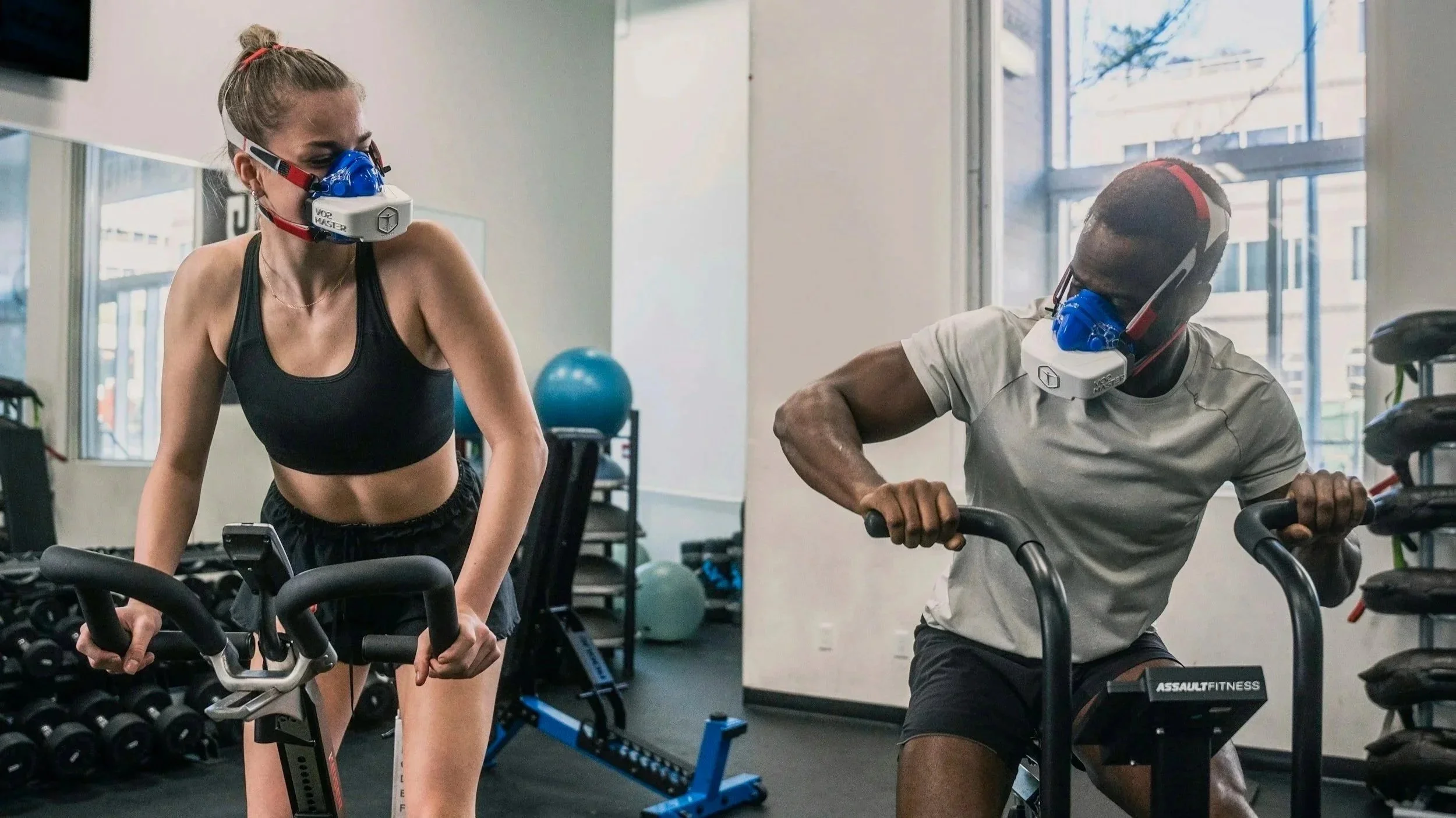
Aerobic capacity is measured directly using the VO2 Master Pro, not estimated from a formula, and is weighted most heavily in your overall score because the evidence behind it is the most robust. Grip strength is measured using a Camry dynamometer and is independently associated with cardiovascular risk, hospitalisation rates, and mortality across all age groups. The chair stand test is strongly associated with fall risk and functional independence in older adults. Single-leg balance has been linked in recent research to elevated mortality risk when someone can't hold it for 10 seconds. Mobility limitations, left unaddressed, are a common early indicator of musculoskeletal risk as we age.
What is it?
This is a simple, guided assessment of how your body is actually performing right now, not how old you feel, not a number on a scale, but real measurements of your strength, balance, mobility, and fitness. You don't need to be an athlete, and nothing about it is intimidating; most of it involves everyday movements like standing up from a chair or balancing on one leg.
We measure five things, each chosen because research consistently links it to how well people age and how long they stay independent. At the end, you get a single, easy to understand "functional fitness age," along with a clear picture of which areas are ahead for your age and which ones are worth working on.
Your birth age is fixed. Your functional fitness age isn't, and this test shows you exactly what to focus on to shift it.
What the results tell you
Your VO2max fitness age, calculated using the validated Nes et al. 2013 method, showing your aerobic age relative to your actual age.
Your overall percentile score across your four core results, VO2max, grip strength, chair stand, and single-leg balance, benchmarked against people your age and sex.
A domain-by-domain breakdown showing exactly where you're ahead for your age and where you're behind.
Your mobility results, scored and reported separately.
And a documented baseline so future retests can show real, measurable change.
Where relevant, your results also include simple clinical flags, such as falls risk indication from your balance result, to help guide what's worth prioritising.
What you'll actually do
Every test in this assessment can be adjusted to suit your current fitness and ability, so don't let the science-heavy names put you off. Nobody is forced through a maximal effort if that's not appropriate for them; we choose the right version of each test for you.
Aerobic capacity (VO2max)
Depending on your fitness level, this might mean walking or cycling at an increasing pace while wearing a lightweight breathing mask, or it might simply mean a comfortable 6-minute walk at your own pace, wearing the same mask, which still gives us a real, directly measured number rather than a guess.
Grip strength
You'll squeeze a handheld device as hard as comfortably possible. Simple, quick, and tells us a surprising amount about your overall strength and health.
Chair stand test
Standing up and sitting back down from a chair, either as many times as you can in 30 seconds, or a gentler timed version if that suits you better. This measures the everyday leg strength that keeps you independent.
Single-leg balance
Standing on one leg for as long as comfortable, first with eyes open. If standing unsupported isn't appropriate for you, we adapt this to a version that still gives us useful information.
Mobility assessment
A short, guided series of everyday stretches and movements, checking how freely your joints move. Nothing strenuous, and every movement is optional if it doesn't feel right for you.
How do I prepare?Wear comfortable exercise clothing and flat shoes suitable for movement
No food, coffee, or caloric drinks for 3 to 4 hours beforehand
Avoid intense exercise in the 24 hours before your assessment if possible; we want to assess your baseline, not your fatigue
Bring any relevant health history if your GP has flagged specific concerns
All prices NZD inclusive of GST. Includes full results report and debrief.
Retests & tracking?We recommend reassessment every 6 to 12 months to track progress. Functional fitness age isn't fixed; consistent, targeted training and lifestyle intervention can meaningfully shift your score at any age. Retest pricing matches initial assessment rates.
How long does this take?Allow 60 to 90 minutes, including all assessments, measurement, and results review.